MT4 after twenty years: an honest take on the platform
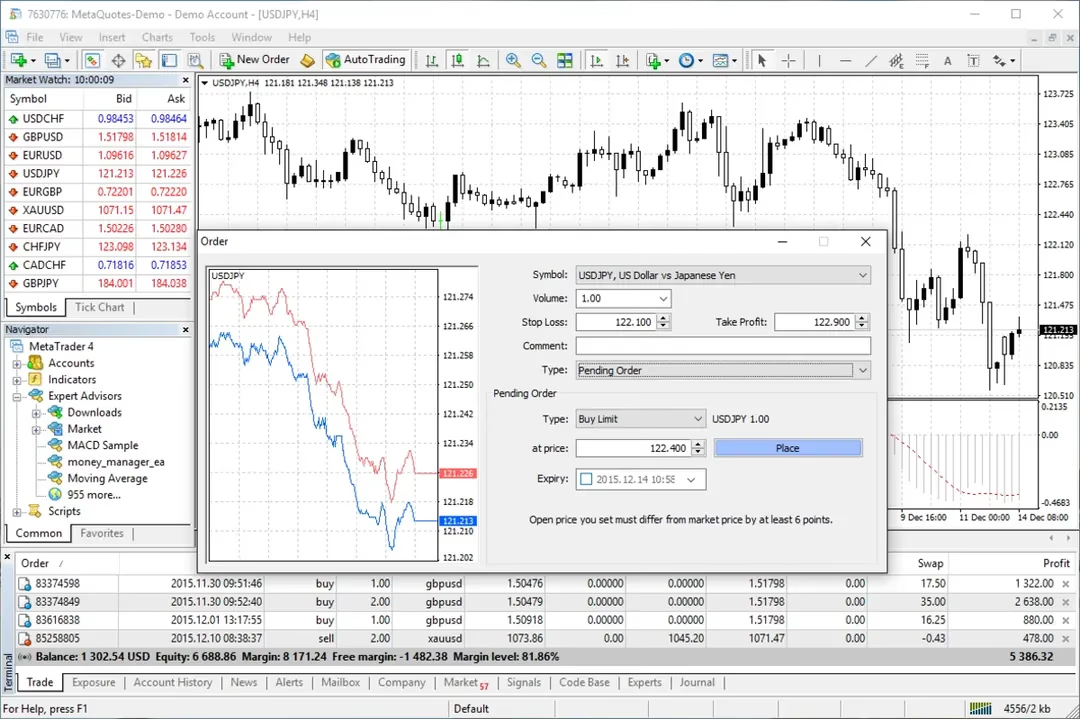
MT4 in 2026: why it refuses to die
MetaQuotes stopped issuing new MT4 licences years ago, nudging brokers toward MT5. Still, most retail forex traders haven't moved. The reason is straightforward: MT4 does one thing well. More than a decade's worth of custom indicators, Expert Advisors, and community scripts only work with MT4. Migrating to MT5 means rebuilding that entire library, and most traders would rather keep trading than recoding.
I spent time testing MT4 and MT5 side by side, and the gap is less dramatic than the marketing suggests. MT5 has a few extras like more timeframes and a built-in economic calendar, but the core charting is about the same. If you're weighing up the two, there's no compelling reason to switch.
Setting up MT4 without the usual headaches
Downloading and installing MT4 is the easy part. The part that trips people up is getting everything configured correctly. On first launch, MT4 shows four charts crammed into one window. Close all of them and open just the markets you follow.
Templates are worth setting up early. Set up your usual indicators once, then right-click and save as template. After that you can load it onto other charts in two clicks. Sounds trivial, but over weeks it makes a difference.
Something most people miss: open Tools > Options > Charts and check "Show ask line." The default view is the bid price on the chart, which makes buy entries seem misaligned until you realise the ask price is hidden.
Backtesting on MT4: what the results actually mean
MT4 comes with a backtester that lets you run Expert Advisors against historical data. But here's the thing: the quality of those results hinges on your tick data. The default history data is modelled, meaning the tester fills gaps mathematically. For reference anything beyond a rough sanity check, download proper historical data.
Modelling quality tells you more than the bottom-line PnL. Anything below 90% means the results aren't trustworthy. I've seen people post backtest results with 25% modelling quality and ask why live trading looks different.
This is one area where MT4 genuinely outperforms most web-based platforms, but the output is only useful with quality tick data.
Custom indicators on MT4: worth the effort?
MT4 comes with 30 default technical indicators. The average trader uses maybe a handful. However where MT4 gets interesting lives in community-made indicators built with MQL4. There are a massive library, spanning simple moving average variations to elaborate signal panels.
Adding a custom indicator is simple: copy the .ex4 or .mq4 file into your MQL4/Indicators folder, reboot MT4, and the indicator shows up in the Navigator panel. The catch is quality control. Free indicators range from excellent to broken. Some are genuinely useful. Many are abandoned projects and will crash your terminal.
If you're downloading custom indicators, verify the last update date and if people in the forums have flagged problems. Bad code won't just give wrong signals — it can freeze the whole terminal.
Risk management settings most MT4 traders ignore
MT4 has a few native risk management options that a lot of people never configure. First worth mentioning is the maximum deviation setting in the new order panel. This defines how much slippage you'll accept on market orders. Leave it at zero and the broker can fill you at whatever price is available.
Stop losses go without saying, but trailing stops are overlooked. Right-click an open trade, pick Trailing Stop, and set your preferred distance. It follows when price moves in your favour. Doesn't work well in choppy markets, but if you're riding trends it removes the need to micromanage the trade.
None of this is complicated to set up and the difference in discipline is noticeable over time.
Expert Advisors — before you trust a robot with your money
EAs sounds appealing: program your strategy and stop staring at charts. In practice, a huge percentage of them lose money over any extended time period. EAs advertised with perfect backtest curves are often curve-fitted — they look great on historical data and break down the moment the market does something different.
That doesn't mean all EAs are useless. A few people build their own EAs for specific, narrow tasks: opening trades at session opens, managing position sizing, or exiting positions at fixed levels. These utility-type EAs are more reliable because they handle mechanical tasks that don't require discretion.
When looking at Expert Advisors, use a demo account for no less than several weeks in different conditions. Running it forward in real time is more informative than any backtest.
Using MT4 outside Windows
The platform was designed for Windows. Running it on Mac deal with friction. Previously was Wine or PlayOnMac, which did the job but came with rendering issues and the odd crash. Certain brokers now offer native Mac apps built on Wine under the hood, which work more smoothly but still aren't true native apps.
The mobile apps, available for both iPhone and Android, are genuinely useful for watching your account and managing trades on the move. Doing proper analysis on a mobile device doesn't really work, but closing a trade while away from your desk has saved plenty of traders.
Look into whether your broker has a native Mac build or just a wrapper — the difference in stability is noticeable.